Leverage lets you control a larger position than your cash alone allows, by borrowing against a deposit called margin.
Key idea: Leverage multiplies your losses exactly as fast as your gains. It does not improve a bad strategy — it magnifies it.
A simple example
With 5× leverage, Rs.10,000 of margin controls a Rs.50,000 position. A 2% move is Rs.1,000 — a 10% swing on your margin. A 20% adverse move could wipe your margin entirely.
Margin calls
If losses erode your margin below a threshold, you get a margin call — add funds or your position is closed automatically at a loss.
How to use it safely
- Start with little or no leverage.
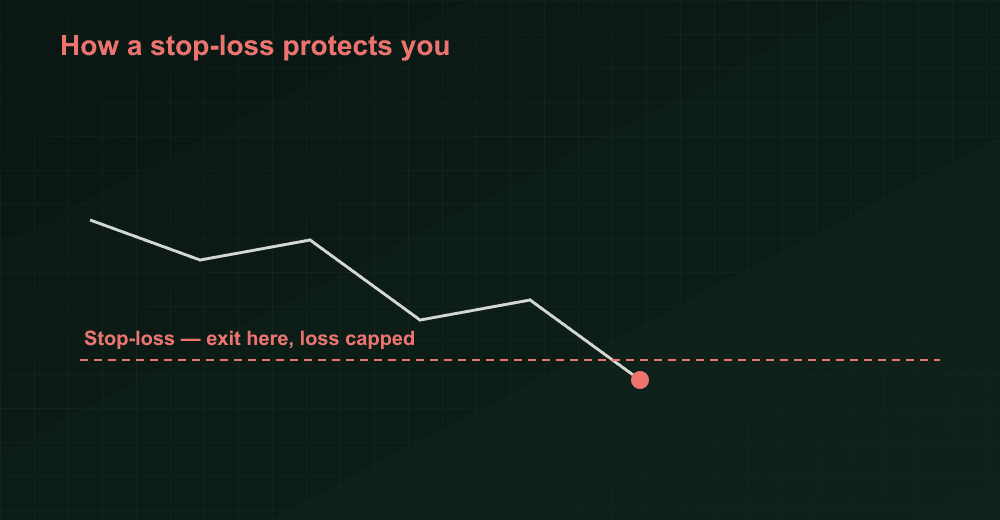
- Always use a stop-loss.
- Size positions on total exposure, not just margin.
- Practise leveraged trades on a simulator first.
Key takeaways
- Leverage magnifies gains and losses equally.
- Margin is your deposit against a larger position.
- A margin call can force-close you at a loss.
- Learn leverage slowly, always with a stop-loss.
Practise this free on StockYatra
Open a free account, get 10,000 virtual coins and trade live-simulated NEPSE & Indian markets with zero real-money risk.